1-WS.com Infrastructure That Powers the Web

1-WS.com

Infrastructure That Powers the Web

Latest Articles

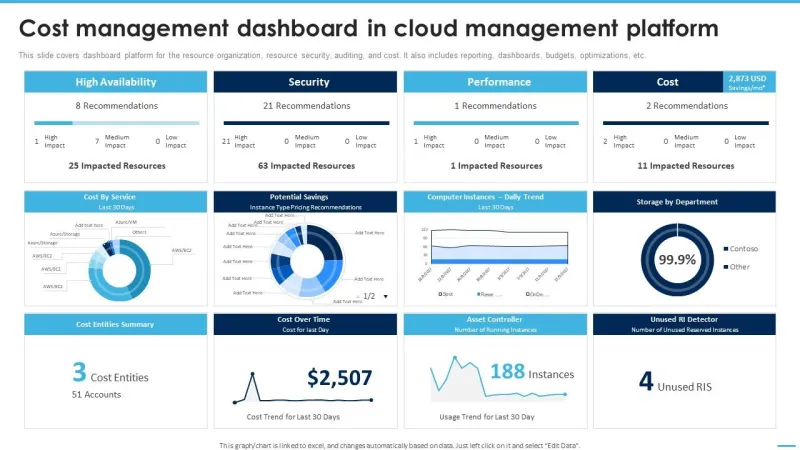
Cloud Migration Sticker Shock: The Costs Vendors Bury in the Fine Print
Infrastructure & Reliability

Cloud Migration Sticker Shock: The Costs Vendors Bury in the Fine Print

Vendors hand you a polished ROI calculator and a migration timeline that looks almost too good to be true — because it is. The real cost of moving your infrastructure to the cloud routinely runs two to three times higher than initial estimates, and the gap is rarely accidental. Understanding where those dollars disappear is the first step toward protecting your organization from a budget spiral that can take years to unwind.
The Slow Fuse: How Misconfigured DNS TTL Values Set Your Infrastructure Up for Catastrophic Failure
Infrastructure & Reliability

The Slow Fuse: How Misconfigured DNS TTL Values Set Your Infrastructure Up for Catastrophic Failure

DNS Time-To-Live settings are among the least scrutinized variables in infrastructure management — until a failover event exposes their consequences. This investigation reveals how gradual TTL misconfigurations accumulate into systemic vulnerabilities, and why mid-market US companies rarely discover the problem until a crisis forces the issue.

The Quiet Disconnect: How WebSocket Infrastructure Failures Destroy Real-Time Experiences While Your Dashboards Stay Green
Infrastructure & Reliability

The Quiet Disconnect: How WebSocket Infrastructure Failures Destroy Real-Time Experiences While Your Dashboards Stay Green

WebSocket connections that silently drop leave users staring at frozen interfaces while every monitoring metric appears normal. For mid-market companies whose products depend on real-time features, this invisible failure mode can erode user trust and revenue long before any alert fires. Understanding the infrastructure gaps that enable silent disconnections is the first step toward closing them.

Scaling Down, Burning Cash: The Autoscaling Timing Gap That Keeps Overcharging You After Traffic Peaks
Infrastructure & Reliability

Scaling Down, Burning Cash: The Autoscaling Timing Gap That Keeps Overcharging You After Traffic Peaks

Most mid-market businesses focus obsessively on scaling up — ensuring their infrastructure can absorb sudden traffic surges. Far fewer scrutinize what happens in the minutes and hours after that traffic recedes. The result is a predictable, largely invisible cost explosion driven by autoscaling policies that were never designed to let go.

Every Millisecond Has a Price: Calculating the True Revenue Cost of Slow Infrastructure
Infrastructure & Reliability

Every Millisecond Has a Price: Calculating the True Revenue Cost of Slow Infrastructure

For mid-market US e-commerce operators, slow infrastructure is not merely a technical inconvenience — it is a measurable drain on daily revenue. This article breaks down how to quantify your latency cost, exposes the architectural chokepoints most commonly responsible for hidden delay, and outlines a structured remediation path that does not require a complete infrastructure rebuild.

Drowning in Data: How Excessive Logging Is Blinding Your Team to Real Infrastructure Failures
Infrastructure & Reliability

Drowning in Data: How Excessive Logging Is Blinding Your Team to Real Infrastructure Failures

Mid-market companies are generating terabytes of log data daily, yet their engineering teams are consistently blindsided by outages that the data technically recorded. The problem is not a shortage of information — it is an absence of signal amid overwhelming noise. This article examines how poorly structured observability strategies turn log volume into a liability and offers a practical framework for reclaiming clarity.

Phantom Connections: The Database Resource Leaks That Are Quietly Strangling Your Application
Infrastructure & Reliability

Phantom Connections: The Database Resource Leaks That Are Quietly Strangling Your Application

Orphaned database connections accumulate silently in web applications, exhausting connection pools and triggering mysterious slowdowns that standard monitoring tools rarely flag. Mid-market companies are particularly vulnerable, often discovering the problem only after a full-scale outage has already damaged customer trust and revenue. This article examines how these invisible resource drains develop, why they evade detection, and what engineering teams can do to eliminate them before they becom

Forgotten Keys, Open Doors: The API Credential Sprawl Silently Compromising Your Infrastructure
Infrastructure & Reliability

Forgotten Keys, Open Doors: The API Credential Sprawl Silently Compromising Your Infrastructure

Across the infrastructure stacks of US businesses, dormant API keys and abandoned service credentials accumulate unnoticed — each one a potential entry point for attackers. Unlike misconfigured firewalls or expired certificates, orphaned credentials rarely trigger alerts, making them among the most persistent and underappreciated security liabilities in modern web operations. This investigation examines how the problem compounds over time, what a breach actually looks like, and what a credible r

Seeing Without Understanding: How Monitoring Dashboards Create a False Sense of Infrastructure Control
Infrastructure & Reliability

Seeing Without Understanding: How Monitoring Dashboards Create a False Sense of Infrastructure Control

A well-populated monitoring dashboard can inspire confidence that has no basis in operational reality. For mid-market US businesses, the gap between what metrics display and what is actually happening inside their infrastructure stack is where outages, revenue loss, and degraded user experience quietly take root. This article examines the structural flaws in most observability setups and the audit steps that reveal what the charts are concealing.

Invisible Overhead: The Forgotten Cloud Resources Quietly Burning Through Your Infrastructure Budget
Infrastructure & Reliability

Invisible Overhead: The Forgotten Cloud Resources Quietly Burning Through Your Infrastructure Budget

Across AWS, Azure, and GCP accounts at mid-market US companies, abandoned virtual machines, detached storage volumes, and idle databases accumulate unnoticed — generating real charges month after month. Understanding why these orphaned resources evade detection, and how to systematically reclaim that spend, is now a critical discipline for any organization managing cloud infrastructure at scale.

The Distributed Session Trap: How Invisible State Management Flaws Are Draining Mid-Market Revenue
Infrastructure & Reliability

The Distributed Session Trap: How Invisible State Management Flaws Are Draining Mid-Market Revenue

When engineers architect distributed systems for scale, session management is often treated as a solved problem — until users start reporting mysterious logouts and abandoned carts. Beneath the surface of modern stateless application design lies a class of infrastructure vulnerabilities that can cost US businesses tens of thousands of dollars per hour without triggering a single obvious alert.

Broken Chain, Broken Trust: How Incomplete SSL Configurations Are Quietly Routing Your Customers to Competitors
Infrastructure & Reliability

Broken Chain, Broken Trust: How Incomplete SSL Configurations Are Quietly Routing Your Customers to Competitors

An SSL certificate that passes basic validation checks can still harbor a configuration flaw capable of triggering browser warnings and hemorrhaging traffic. Mid-market retailers across the US have discovered — often too late — that incomplete certificate chains are among the most deceptive and costly infrastructure oversights in modern web operations.

When Recovery Becomes the Disaster: The Backup Restoration Failures Mid-Market Businesses Never See Coming
Infrastructure & Reliability

When Recovery Becomes the Disaster: The Backup Restoration Failures Mid-Market Businesses Never See Coming

A backup that cannot be successfully restored under real-world conditions is not a backup — it is a liability dressed as a safeguard. Mid-market US businesses routinely discover this truth at the worst possible moment, when a genuine crisis demands rapid, flawless recovery and the infrastructure beneath them refuses to cooperate. This article examines the systemic failures that turn disaster recovery plans into disaster amplifiers.

Black Friday Infrastructure Failures: The Bandwidth Math Nobody Does Until It's Too Late
Infrastructure & Reliability

Black Friday Infrastructure Failures: The Bandwidth Math Nobody Does Until It's Too Late

Every November, mid-market e-commerce companies discover a painful truth: their bandwidth projections were built on assumptions that evaporate under real peak-traffic conditions. The result is cascading infrastructure failures, lost revenue, and a post-mortem that asks why nobody ran the numbers correctly in the first place. This article examines the systematic planning errors that leave growing retailers exposed on the highest-stakes shopping day of the year.

Container Sprawl and the Budget Spiral: What Your Kubernetes Migration Is Really Costing You
Infrastructure & Reliability

Container Sprawl and the Budget Spiral: What Your Kubernetes Migration Is Really Costing You

Containerization promises agility and efficiency, but for many US organizations, the migration from traditional monolithic architectures has introduced a cascade of hidden expenses that dwarf original projections. From orchestration overhead to runaway image storage, the financial reality of Kubernetes deployments often contradicts the business case that justified them. Before your next infrastructure decision, understand what the total bill actually looks like.

The Hidden Price Tag of Serverless: When Pay-Per-Use Becomes Pay-Too-Much
Infrastructure & Reliability

The Hidden Price Tag of Serverless: When Pay-Per-Use Becomes Pay-Too-Much

Serverless architecture promises frictionless scaling and lean billing, but for many US businesses, the reality is a mounting invoice that dwarfs what traditional hosting would have cost. Understanding the true economics of serverless — cold starts, invocation fees, and egress charges — is essential before committing your infrastructure to a model that may not fit your workload.

Compliance Blind Spots: How Infrastructure Misconfigurations Are Triggering HIPAA and PCI Fines at Mid-Market US Companies
Infrastructure & Reliability

Compliance Blind Spots: How Infrastructure Misconfigurations Are Triggering HIPAA and PCI Fines at Mid-Market US Companies

Thousands of mid-market US businesses are unknowingly violating HIPAA, PCI-DSS, and SOC 2 requirements not through negligence in policy, but through subtle infrastructure misconfigurations that evade standard security reviews. The financial and reputational consequences are severe — and largely preventable. This guide examines where the gaps hide and how to close them without a dedicated security team.

Web Hosting

The Silent Connection Killer: Why Modern Real-Time Applications Fail on Traditional Hosting Infrastructure

Live chat tools, collaborative dashboards, and real-time notification systems are failing silently across thousands of US web applications — not because of buggy code, but because the underlying hosting infrastructure was never designed to sustain persistent WebSocket connections. Understanding why this happens, and what infrastructure patterns resolve it, is now a prerequisite for any business deploying modern web applications.

Failover Theater: Why Your Multi-Region Architecture May Collapse the Moment You Need It Most
Infrastructure & Reliability

Failover Theater: Why Your Multi-Region Architecture May Collapse the Moment You Need It Most

Deploying infrastructure across multiple regions feels like a comprehensive disaster-recovery strategy — until a real outage exposes the silent gaps buried in your failover logic. From database replication lag to regional quota exhaustion, the assumptions baked into most multi-region deployments are far more fragile than engineering teams realize. This article examines the structural weaknesses that turn backup infrastructure into an expensive illusion.

Unguarded at Scale: The DDoS Vulnerabilities Exposing Mid-Market US Businesses Right Now
Web Hosting

Unguarded at Scale: The DDoS Vulnerabilities Exposing Mid-Market US Businesses Right Now

Enterprise organizations have long invested in sophisticated DDoS mitigation tooling, leaving mid-market US companies as the path of least resistance for attackers. Outdated rate-limiting configurations, under-tuned web application firewalls, and a lack of traffic baseline monitoring create exploitable gaps that modern attack campaigns are specifically engineered to target. This investigation details how those vulnerabilities are identified and exploited — and what a practical, budget-conscious