Failover Theater: Why Your Multi-Region Architecture May Collapse the Moment You Need It Most

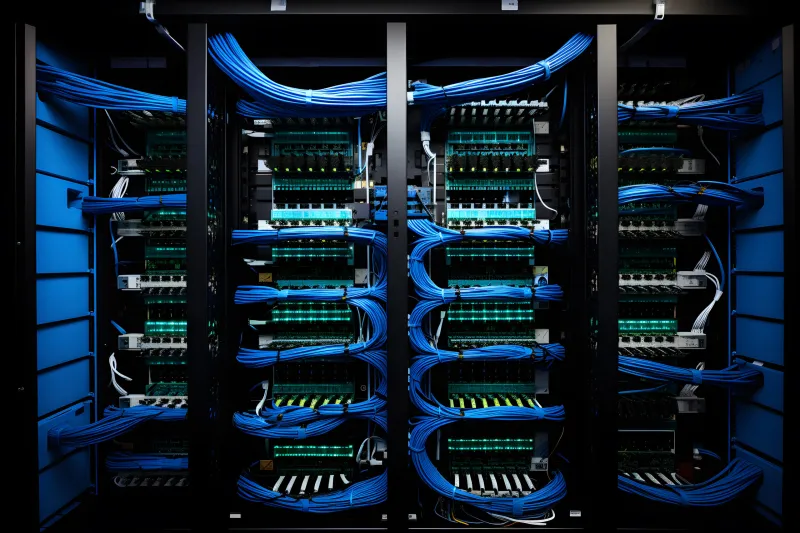
Photo: Ana Las Heras, CC BY-SA 4.0, via Wikimedia Commons
There is a particular kind of false confidence that settles over engineering teams after they complete a multi-region deployment. The architecture diagram looks authoritative. The runbook is thorough. Leadership has been assured that the business is protected against regional outages. Yet when an actual disaster unfolds — a cloud provider availability zone failure, a cascading network partition, a sudden traffic surge — that confidence evaporates with alarming speed.
The uncomfortable reality is that multi-region failover is not a feature you configure once and trust indefinitely. It is a living system that degrades silently, fails in ways that only surface under genuine stress, and carries architectural assumptions that rarely survive contact with real-world conditions. For businesses that depend on continuous availability, understanding where these systems break is not optional — it is foundational.
The Illusion of Automatic Failover
Most cloud-hosted multi-region deployments rely on health checks and automated routing policies to redirect traffic when a primary region becomes unavailable. On paper, this mechanism is straightforward. In practice, the definition of "unavailable" is where the trouble begins.
Health checks are typically configured to probe a single endpoint — often a lightweight status page or a basic TCP connection. These checks confirm that a server is responding, not that it is functioning correctly. A database connection pool that has been exhausted, an application layer that is returning 500 errors to real users, or a caching layer that has gone stale will not necessarily trigger a health check failure. The infrastructure reports itself as healthy while actively degrading the user experience.
Furthermore, the thresholds governing failover decisions — how many consecutive failures are required, over what time interval — introduce meaningful delays. During a genuine outage, several minutes can represent tens of thousands of failed transactions for a mid-to-large e-commerce operation.
Database Replication: The Hidden Lag Problem
Perhaps the most consequential and least-discussed failure point in multi-region architectures is the state of database replication at the moment failover is triggered. Asynchronous replication — the standard approach for geographically distributed databases — operates with an inherent delay. Under normal conditions, that lag may be measured in milliseconds. Under network stress, it can stretch into seconds or minutes.
When a primary region fails and traffic is rerouted to a secondary region, the database serving that region reflects the world as it existed some number of seconds in the past. For transactional systems — payment processors, inventory management platforms, reservation engines — this discrepancy is not a minor inconvenience. It is a data integrity crisis. Orders placed in the final seconds before failover may vanish entirely. Inventory counts may reflect availability that no longer exists. Customer account states may revert to earlier versions.
Engineering teams frequently underestimate replication lag because they measure it during low-traffic periods. The lag profile during a peak traffic event, which is precisely when outages are most likely to occur, is a fundamentally different measurement.
Regional Quota Limits: The Ceiling Nobody Checks
Cloud providers enforce resource quotas on a per-region basis. These limits govern the number of compute instances, load balancer connections, IP addresses, and other resources a given account can provision within a specific region. During normal operations, these quotas are rarely approached. During a failover event, however, the secondary region must absorb the full production load — sometimes instantaneously.
If the secondary region's quotas have not been explicitly validated against peak production traffic requirements, the failover itself may fail. The region accepts the routing change, begins receiving traffic, and then reaches its provisioning ceiling before it can serve the load. The result is an outage in both regions simultaneously — precisely the scenario the multi-region architecture was designed to prevent.
This failure mode is particularly insidious because it does not appear in standard monitoring dashboards. Quota exhaustion errors surface in provisioning logs that many teams do not actively monitor, and the symptoms — elevated error rates, connection timeouts — are indistinguishable from other failure types without careful investigation.
Stress-Testing Your Failover Before Disaster Does It for You
The only reliable method for validating multi-region failover is deliberate, scheduled failure injection. This practice, often called chaos engineering, involves intentionally disabling primary-region resources during controlled test windows and observing the actual behavior of the failover system.
A rigorous stress-testing framework should address the following areas:
Failover trigger accuracy. Confirm that health checks are evaluating meaningful application behavior — not just TCP connectivity. Instrument checks that validate database query performance, cache hit rates, and critical API response codes.
Replication lag under load. Measure database replication lag during simulated peak traffic conditions, not during quiet maintenance windows. Establish a maximum acceptable lag threshold and configure automated alerts when that threshold is approached.
Regional quota headroom. Audit current quota utilization in all secondary regions against documented peak traffic requirements. Submit quota increase requests proactively, accounting for expected growth over the next twelve months.
Failback procedures. Many teams practice failover without ever testing the return path. A failback that corrupts data or requires extended manual intervention can extend an outage far beyond the initial incident window.
Communication and coordination. Technical systems do not operate in isolation. Validate that on-call notification pipelines, runbook access, and inter-team communication channels remain functional when primary infrastructure is unavailable.
Building Infrastructure That Earns Its Confidence
Multi-region deployment is a meaningful investment in resilience — but only when the architecture is validated against realistic failure scenarios rather than optimistic assumptions. The gap between a deployment that looks reliable and one that actually performs under pressure is measured in the rigor applied to testing, monitoring, and ongoing maintenance.
At 1-WS.com, the infrastructure services we support are designed with this distinction in mind. Reliability is not a configuration setting. It is the product of continuous verification, honest assessment of failure modes, and the discipline to test systems before circumstances force the issue. For businesses that cannot afford extended downtime, that discipline is the difference between a failover strategy and failover theater.