When Your API Breaks Before Your App Does: The Hidden Infrastructure Crisis Killing SaaS Companies
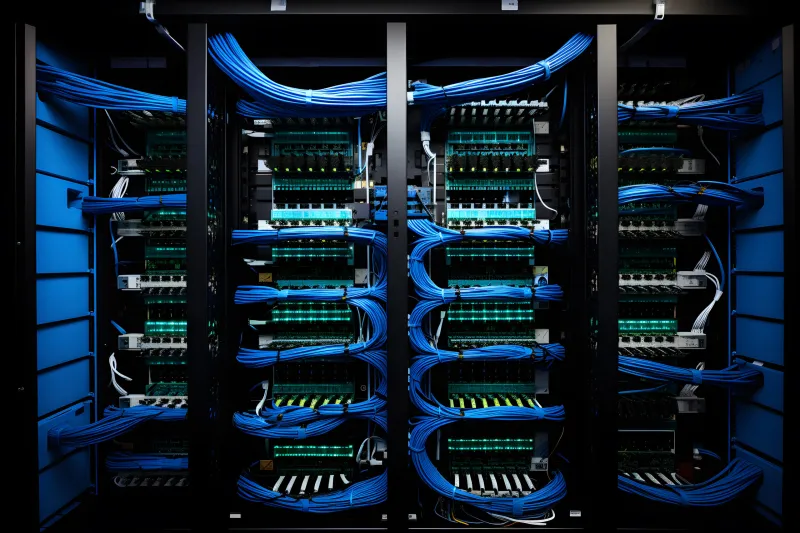
Photo: API server infrastructure data center network cables technology, via www.bcsconsultants.com
There is a particular kind of operational nightmare that strikes SaaS companies in the middle of their growth curve. The product is working. Users are signing up. Revenue is climbing. And then, without warning, everything stops — not because the application crashed, but because the infrastructure responsible for moving data between services quietly reached its limit.
This scenario plays out with alarming regularity across the American tech landscape. API infrastructure, the connective tissue between application layers, databases, third-party services, and end users, tends to be treated as an afterthought during early development. It becomes a liability the moment a company starts scaling in earnest.
The Architecture Decision That Haunts You Later
Most SaaS products are built by small, fast-moving teams with a single priority: ship something that works. In that environment, API design decisions are made under pressure, with limited resources, and almost no consideration for what happens when the user base grows by an order of magnitude.
The typical pattern looks like this: A startup builds a monolithic API layer that handles authentication, data retrieval, business logic, and third-party integrations within a single service. It works beautifully at 500 users. It begins to crack at 5,000. By 50,000, it is a bottleneck that threatens the entire business.
Consider the experience of a mid-sized B2B software company based in Austin, Texas, that provides workflow automation tools to enterprise clients. After landing a contract with a Fortune 500 retailer, their platform experienced a 400 percent spike in API call volume within a single quarter. Their monolithic API layer, which had never been stress-tested beyond internal estimates, began dropping requests under peak load. Client dashboards went blank. Automated workflows stalled. The company spent three weeks in emergency remediation, burning through engineering resources and straining the client relationship to its breaking point.
The root cause was not a bug in the application. It was an infrastructure architecture that was never designed to handle the load that business success demanded.
The Three Most Common API Infrastructure Failures
Across the SaaS industry, infrastructure bottlenecks tend to cluster around three distinct failure modes.
Rate limiting without observability. Many platforms implement rate limiting as a basic protection mechanism but fail to instrument it properly. When limits are hit, the system throttles requests — but without adequate logging and alerting, engineering teams have no visibility into how often this is occurring or which clients are affected. By the time the problem surfaces, damage to user experience and business relationships has already accumulated.
Synchronous dependencies in high-volume flows. APIs that make synchronous calls to slow downstream services — legacy databases, external payment processors, or third-party data providers — inherit those latency characteristics and amplify them under load. A single external call averaging 800 milliseconds may be acceptable at low volume. At scale, it becomes the constraint that determines maximum throughput for the entire platform.
Inadequate gateway capacity. Many growing companies rely on API gateways that were provisioned for their traffic at the time of configuration and never revisited. As request volume grows, the gateway itself becomes the chokepoint. This is especially common among companies that use shared or entry-level hosting environments without dedicated infrastructure planning.
What the Numbers Actually Tell You
One of the most reliable early warning signs of impending API infrastructure failure is a divergence between application-level error rates and infrastructure-level metrics. When your application logs look clean but users are reporting intermittent failures, the problem almost certainly lives in the infrastructure layer.
Specifically, watch for:
- P99 latency climbing faster than P50 latency. This indicates that a subset of requests is experiencing disproportionate delays, often due to resource contention at the infrastructure level.
- Connection pool exhaustion events. These appear in infrastructure logs and signal that your API layer is accumulating more simultaneous requests than it can handle concurrently.
- Increased 502 and 504 HTTP error rates. Gateway-level errors of this type frequently indicate that upstream services are not responding within timeout windows — a symptom of infrastructure strain rather than application failure.
These signals are available to any engineering team with proper monitoring in place. The problem is that many early-stage SaaS companies do not invest in infrastructure observability until after they have experienced a production incident.
Evaluating Infrastructure Before the Crisis Arrives
The most effective approach to API infrastructure resilience is a structured evaluation conducted well before capacity limits are approached. At 1-WS.com, we work with organizations across growth stages, and the companies that navigate scaling successfully share a common discipline: they treat infrastructure assessment as an ongoing practice, not a reactive exercise.
A practical framework for evaluating API infrastructure readiness involves four questions:
1. What is your current peak request volume, and what is your theoretical maximum? If you cannot answer both of these questions with confidence, you lack the observability necessary to manage infrastructure proactively.
2. Where are your synchronous dependencies, and what are their SLAs? Every external service your API calls synchronously is a potential failure point. Map them, measure their latency, and determine which can be made asynchronous or cached.
3. How is your infrastructure provisioned, and who manages scaling decisions? Static provisioning in dynamic traffic environments is a recipe for incidents. Understanding who is responsible for capacity decisions — and how quickly those decisions can be executed — is essential.
4. What is your recovery time when the API layer fails? This is the question most teams cannot answer until they have experienced a failure. Conducting a planned failure exercise before an unplanned one occurs is one of the highest-value reliability investments available.
The Cost of Waiting
The financial case for proactive infrastructure investment is straightforward. Emergency remediation during a production incident costs far more than planned infrastructure work — in engineering hours, in potential SLA penalty payments, in customer churn, and in reputational damage that is difficult to quantify but very real.
For SaaS companies operating in competitive verticals, an infrastructure failure at a critical growth moment can permanently alter the trajectory of the business. Clients who experience a significant outage during their onboarding period rarely give a second chance. Enterprise buyers who see instability in early pilots do not expand contracts.
The API layer is not glamorous infrastructure. It does not generate the kind of engineering enthusiasm that new product features do. But it is the layer on which everything else depends — and the layer that fails first when growth outpaces planning.
Building on a foundation that scales with your ambitions is not optional. It is the difference between a company that capitalizes on its growth moment and one that is defined by the incident that happened when it arrived.