How a Single DNS Misconfiguration Nearly Erased a Thriving Online Business — And What Every Owner Must Audit Today
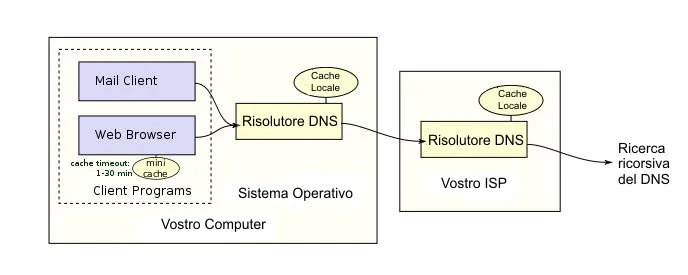
Photo: Samadhi56 at Italian Wikipedia, Public domain, via Wikimedia Commons
In the spring of 2022, a direct-to-consumer health and wellness company headquartered in Denver, Colorado, discovered that its primary domain had effectively gone dark. The business, which had taken six years to grow to approximately $10 million in annual revenue, was invisible to the internet. Customers attempting to visit the website received connection errors. Email campaigns bounced. The company's customer support inbox went silent — not because no one was writing, but because inbound messages were being rejected at the mail server level.
The cause was not a cyberattack. It was not a hosting outage. It was a single incorrectly configured DNS record, introduced during what was supposed to be a routine domain management update.
Understanding Why DNS Is So Consequential
The Domain Name System functions as the internet's address book. When a user types a web address into a browser, DNS translates that human-readable name into the numerical IP address where the website actually lives. Every interaction a customer has with an online business — visiting a website, receiving a marketing email, submitting a form, completing a purchase — depends on DNS functioning correctly.
What makes DNS uniquely dangerous from an operational standpoint is its combination of complexity and invisibility. DNS configurations consist of multiple record types, each serving a distinct function. A records point domains to IP addresses. MX records direct email traffic to mail servers. CNAME records create aliases between domain names. TXT records carry verification data for services ranging from Google Workspace to anti-spam frameworks. NS records delegate authority for a domain to specific nameservers.
Most business owners and even many non-specialist developers interact with these records infrequently, often only when setting up a new service or migrating between providers. That infrequency creates risk. DNS records are typically edited through registrar or hosting control panels, where a single mistyped character, a missing period, or an incorrect TTL value can produce consequences that propagate across the internet within minutes.
The Anatomy of a DNS Disaster
Returning to the Denver company: the incident began when a developer was tasked with pointing the company's domain to a new hosting environment. The process required updating the domain's A record to reflect the new server's IP address. During the update, the developer inadvertently entered an incorrect IP address — transposing two digits in the four-part address.
The error was submitted and saved. Because the domain's TTL (Time to Live) value had been set to 300 seconds — a low value intended to allow for quick propagation during migrations — the incorrect record began spreading to DNS resolvers worldwide within five minutes.
Within twenty minutes, the company's website was unreachable for the majority of its customers. Within an hour, email delivery had failed because the hosting provider's SPF record, which had been configured relative to the now-incorrect A record, was producing authentication failures. By the time the error was identified and corrected, the incorrect DNS data had propagated to resolvers across North America, Europe, and parts of Asia.
Total downtime: eleven hours. Estimated lost revenue from abandoned transactions: over $40,000. Long-term email deliverability impact from the SPF failures: several months of reduced inbox placement rates. Customer service backlog created by the communication blackout: two weeks to clear.
The company survived. But the incident exposed a dependency that its leadership had never fully appreciated: the entire business sat atop a DNS configuration that almost no one on the team fully understood.
The Mistakes That Make DNS Fragile
DNS misconfigurations tend to fall into recognizable categories. DevOps professionals and hosting specialists consistently identify the following as the most common sources of failure.
Unmanaged TTL values. TTL determines how long DNS resolvers cache a record before checking for updates. Businesses that set very low TTLs to enable rapid changes also accelerate the propagation of errors. Conversely, very high TTLs mean that corrections take longer to reach end users after an error is identified. Neither extreme is inherently wrong, but TTL values should be deliberate and documented — not left at whatever default the registrar assigned at setup.
Orphaned records. As businesses add services, integrate third-party platforms, and migrate between hosting environments over time, DNS zones accumulate records that no longer correspond to active services. These orphaned records create security exposure: a CNAME pointing to a domain that is no longer registered, for example, can be claimed by a malicious actor and used to serve fraudulent content under the legitimate company's domain name.
Missing or incorrect SPF, DKIM, and DMARC records. Email authentication depends on DNS records being present, accurate, and aligned with one another. Many businesses configure these records during initial setup and never revisit them after changing email providers, adding marketing platforms, or modifying their domain structure. The result is often degraded deliverability or, in serious cases, complete mail rejection.
Nameserver inconsistency. When a domain is transferred between registrars or when hosting environments change, nameserver records must be updated at the registrar level. Businesses that complete hosting migrations without verifying nameserver alignment can find themselves in a split-DNS condition where some resolvers are receiving correct information and others are not.
A Practical DNS Audit Checklist
For any business that depends on web infrastructure — which is to say, virtually every business operating in the US today — a periodic DNS audit is not optional. The following checklist provides a starting framework.
Step 1: Export your complete DNS zone file. Most registrars and DNS management platforms allow you to export a full record of your DNS configuration. Do this before making any changes, and store the export in a secure, version-controlled location.
Step 2: Verify every A and CNAME record resolves to an active, intentional destination. Use a DNS lookup tool to confirm that each record points where it is supposed to point. Flag any records that resolve to IP addresses or domains you do not recognize.
Step 3: Check for orphaned CNAMEs pointing to third-party platforms. If you have ever used Heroku, Fastly, GitHub Pages, or similar services and discontinued that use, verify that the associated CNAME records have been removed.
Step 4: Validate your email authentication records. Use a dedicated SPF/DKIM/DMARC validation tool to confirm that your email authentication records are syntactically correct, logically consistent, and aligned with the mail-sending services your organization currently uses.
Step 5: Document your nameservers and confirm they match your registrar's records. Log in to your domain registrar and confirm that the nameservers listed there match the nameservers your DNS management platform expects.
Step 6: Review TTL values for appropriateness. For stable, production environments, TTL values between 3,600 and 86,400 seconds (one hour to one day) are generally appropriate. Lower values should be used intentionally and temporarily, not as a permanent configuration.
Step 7: Establish a change management process. DNS changes should never be made without documentation, peer review, and a rollback plan. A single-person, undocumented change process is the environment in which the Denver company's incident occurred.
The Infrastructure Layer Businesses Take for Granted
DNS is the kind of infrastructure that organizations notice only when it fails. When it is working correctly, it is entirely invisible. That invisibility is precisely what makes it dangerous: businesses build revenue-generating operations on top of DNS configurations they have not reviewed in years, managed by providers they selected for reasons that may no longer be relevant.
At 1-WS.com, we consistently observe that domain and DNS management is one of the most neglected areas of web infrastructure governance for small and mid-sized businesses. It requires no ongoing maintenance when functioning correctly, which creates a false sense that it requires no attention at all.
The companies that avoid DNS disasters are not the ones with the most sophisticated technology. They are the ones that treat their domain infrastructure with the same deliberate attention they give to their applications, their security, and their data. In an environment where a single mistyped IP address can take a $10 million business offline for eleven hours, that attention is not excessive. It is essential.